
Home / Features
Everything a self-managing landlord keeps track of.
What each part of Rentistry does, the problem it deals with, and what it saves you. Every screen below is the real app on demo data.
Properties
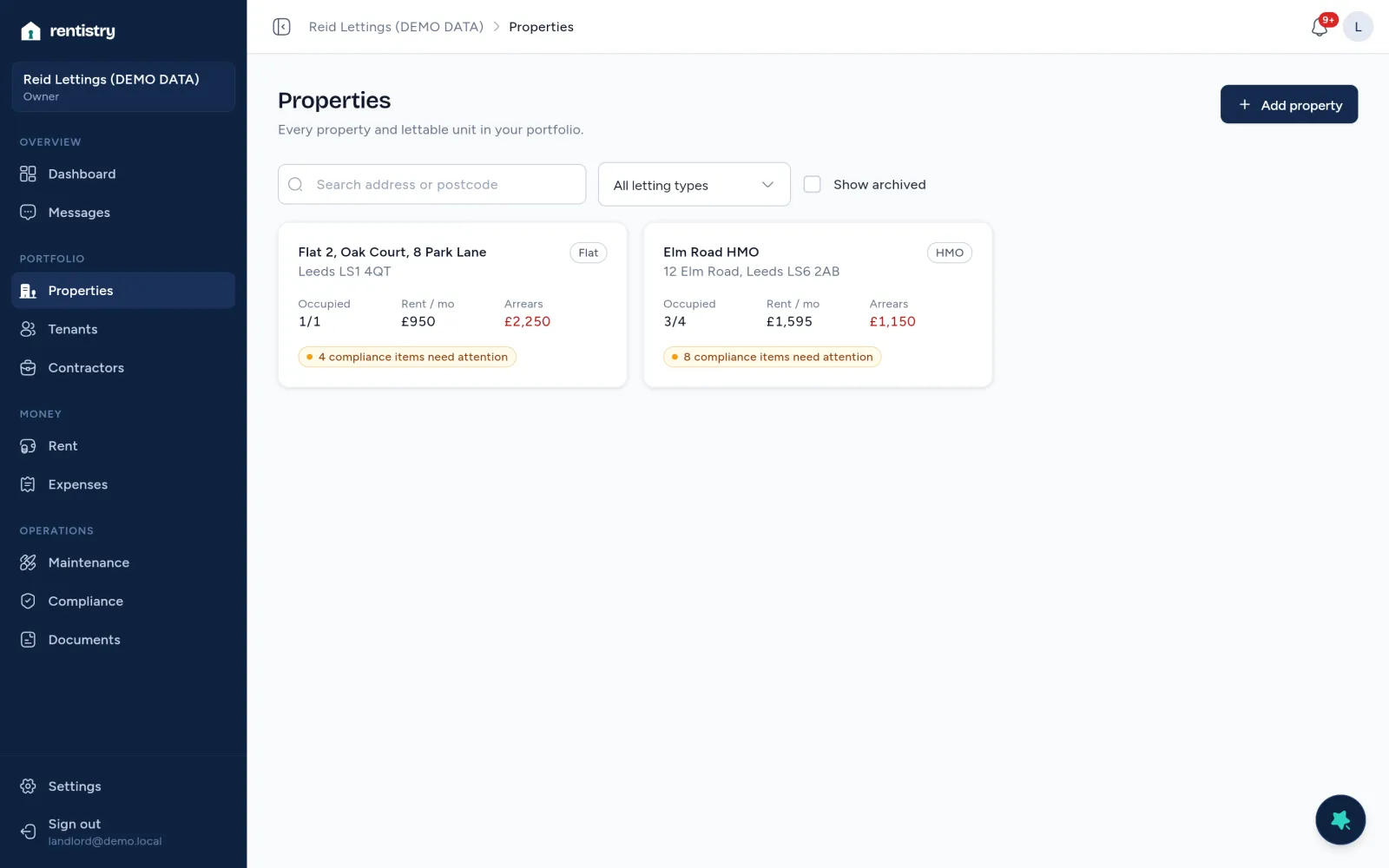
Every house, flat and HMO you let, with its rooms or flats set up as units.
- The problem
- Property details end up spread across mortgage letters, insurance emails and a spreadsheet.
- What it saves you
- One record per property, and a list that shows occupancy, rent and arrears for each.
- House, flat, HMO or multi-unit, with units created for you
- Address lookup by postcode
- Ownership, purchase, mortgage and insurance details
- Archive a property you no longer let
Tenants and tenancies
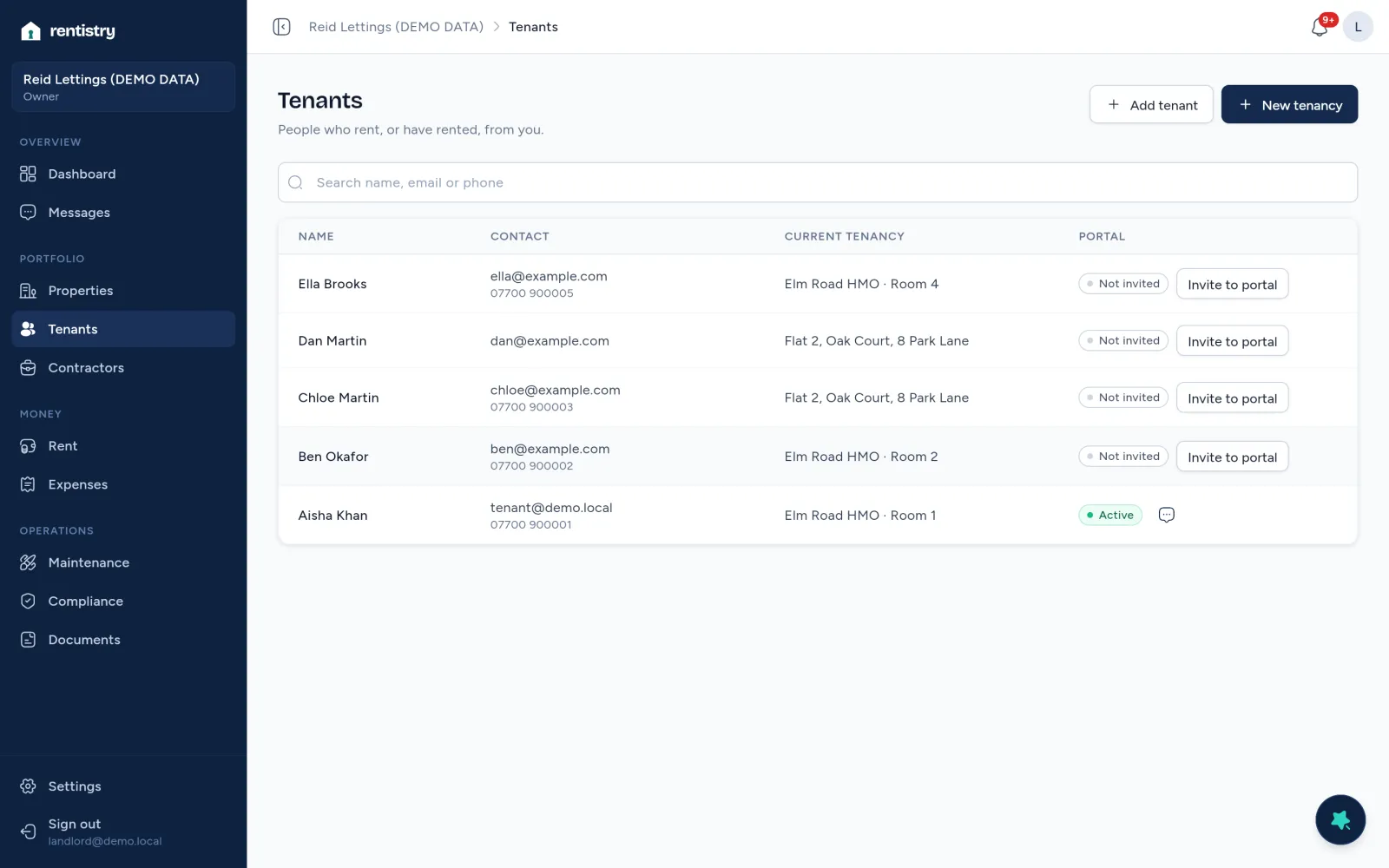
Tenant records, joint tenancies and the details of each let, set up in four steps.
- The problem
- Rent amounts, deposit details and notice dates live in different places, and are hard to find when you need them.
- What it saves you
- A single tenancy record with rent, deposit, notices, documents and the people in it.
- A four-step setup: unit and tenants, rent, deposit, review
- Periodic tenancies, with the rent frequency and due day
- Deposit record and protection deadline
- Notices recorded, with warnings on short notice periods and rent increases within 12 months
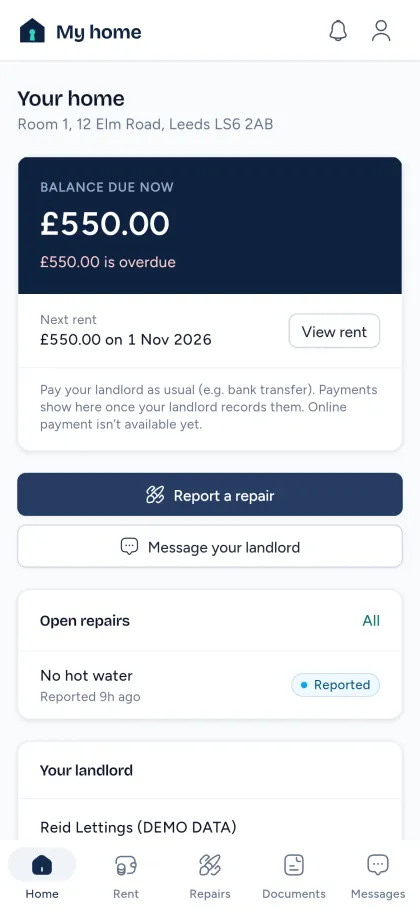
- Invite tenants to their own portal
Rent and money
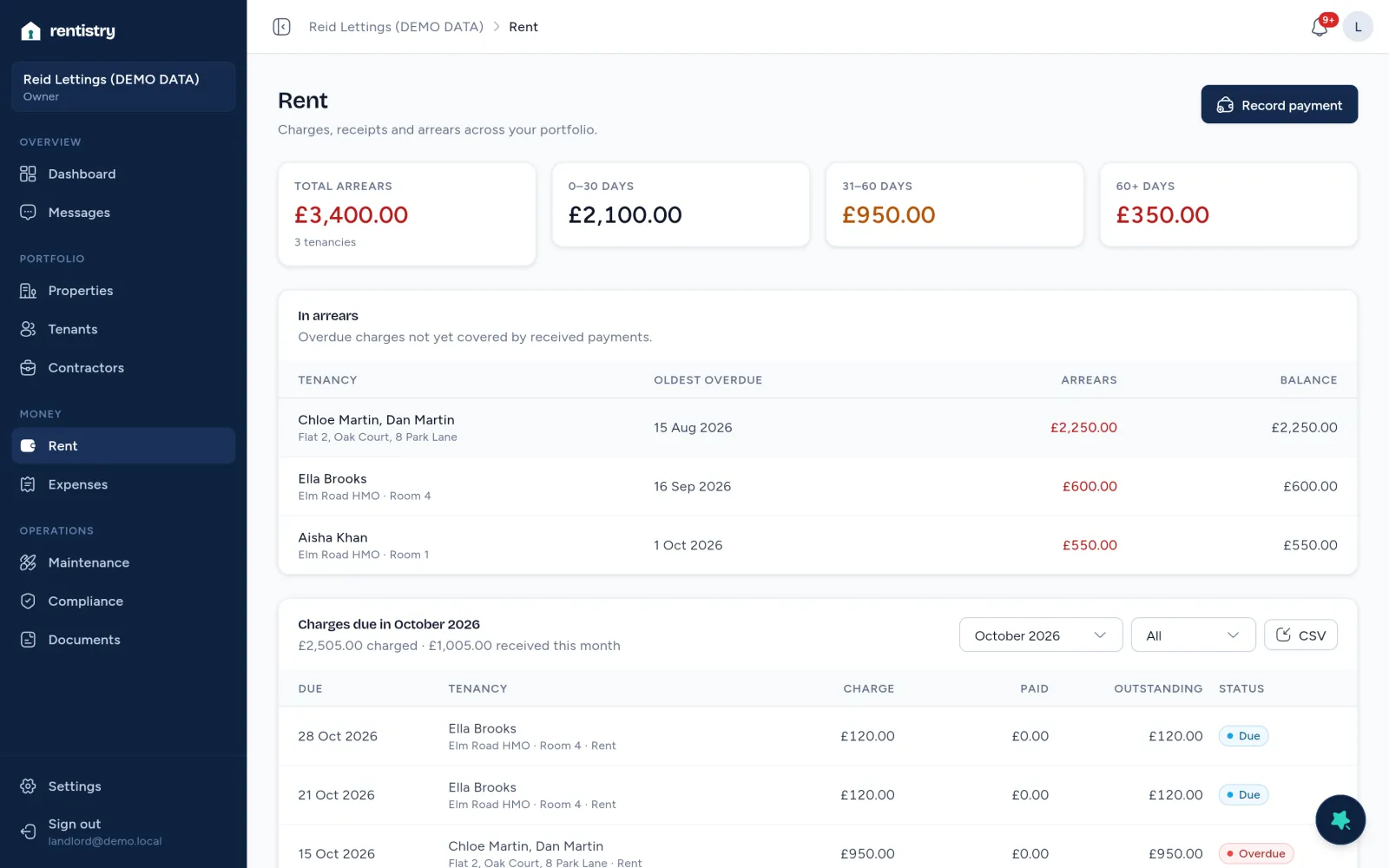
A rent schedule generated from each tenancy, payments you record, and arrears worked out for you.
- The problem
- Matching bank transfers to who owes what, month after month, by hand.
- What it saves you
- Arrears by age across the portfolio, and a statement you can print for any tenancy.
- Charges created automatically for each rent period
- Record full, part or over payments; they’re allocated oldest first
- Arrears ageing: 0 to 30, 31 to 60 and over 60 days
- Printable rent statements and CSV export
- Expenses by category with receipts, and net cash flow on the dashboard
Rentistry records payments you’ve received. It doesn’t collect rent online.
Repairs and maintenance
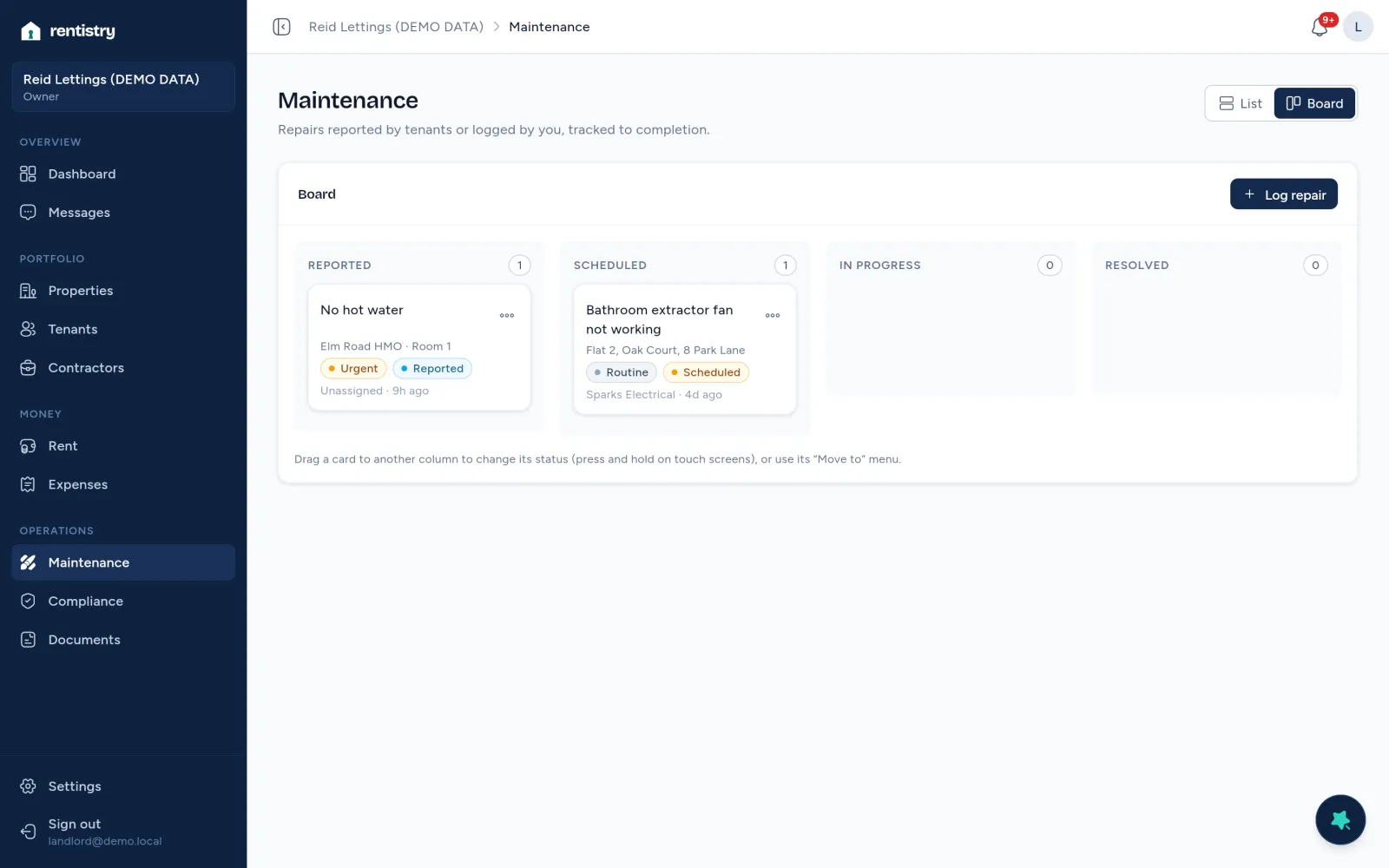
Tenants report repairs with photos; you take each one from reported to resolved.
- The problem
- Repairs arrive by text and phone call, and it’s easy to lose track of what was promised and when.
- What it saves you
- Every repair has a status, a timeline of updates, a contractor and its costs, on a list or a board.
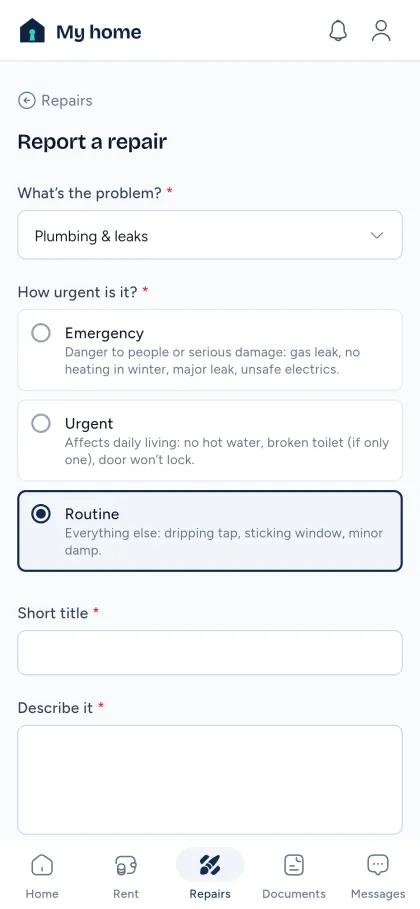
- Tenant reports with a category, urgency and up to six photos
- Emergency guidance shown before an emergency is sent
- A board you can drag between reported, scheduled, in progress and resolved
- Your own contractor directory, appointments and costs
- Internal notes that tenants don’t see
Compliance centre
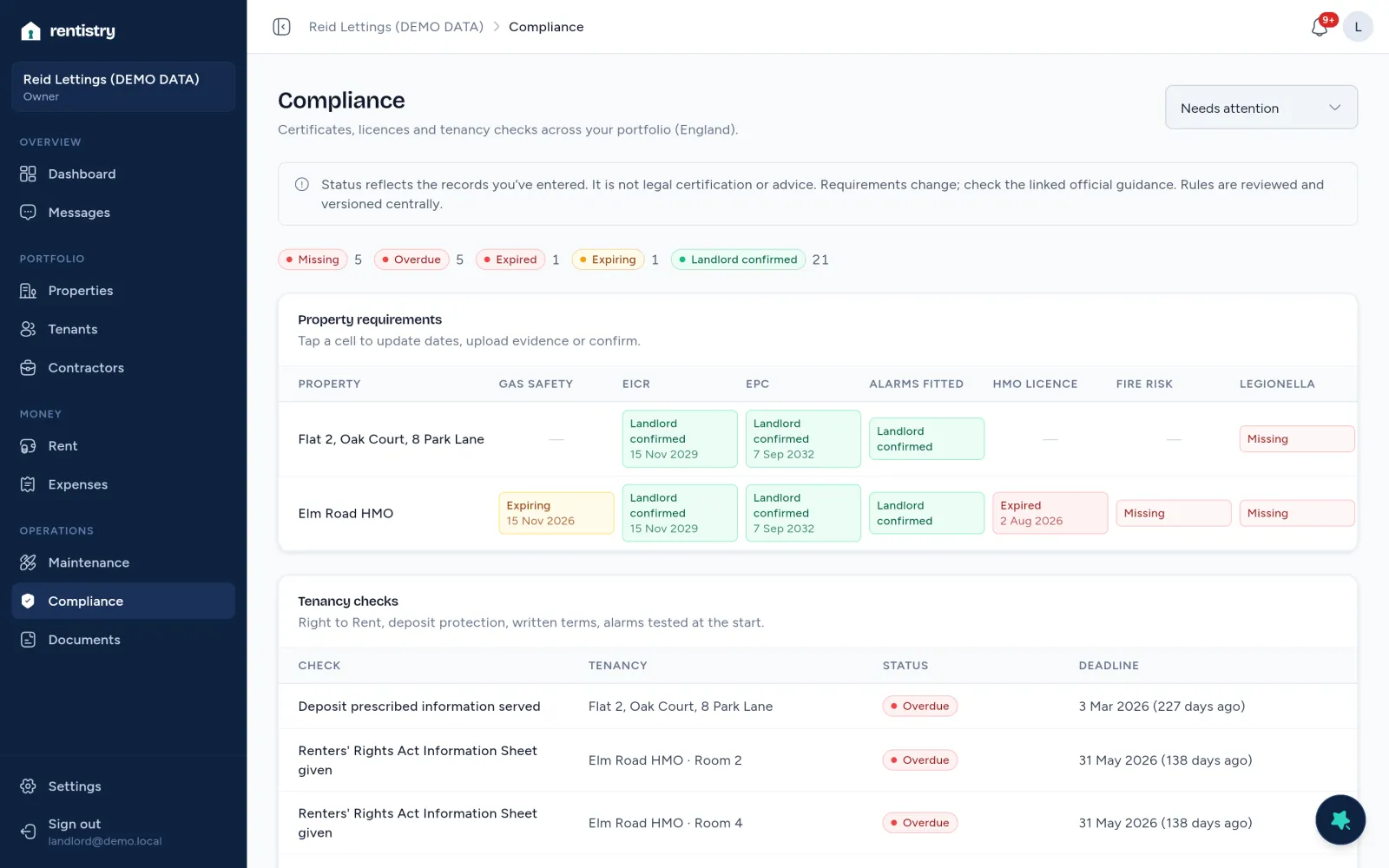
The certificates, licences and tenancy checks that apply to each property in England, in one matrix.
- The problem
- Gas safety, electrical checks, EPCs, licences and tenancy paperwork all run on different dates, and missing one is costly.
- What it saves you
- You can see at once what’s missing, expiring or overdue, with reminders before dates arrive.
- Requirements created for each property and tenancy based on what applies
- Dates, references, notes and evidence uploads for each item
- Links to the official guidance for each requirement
- Rules kept up to date centrally; reviewed against the Renters’ Rights Act 2025 as commenced on 14 Oct 2026
Status reflects the records you enter. It is not legal certification or advice. England only.
Documents
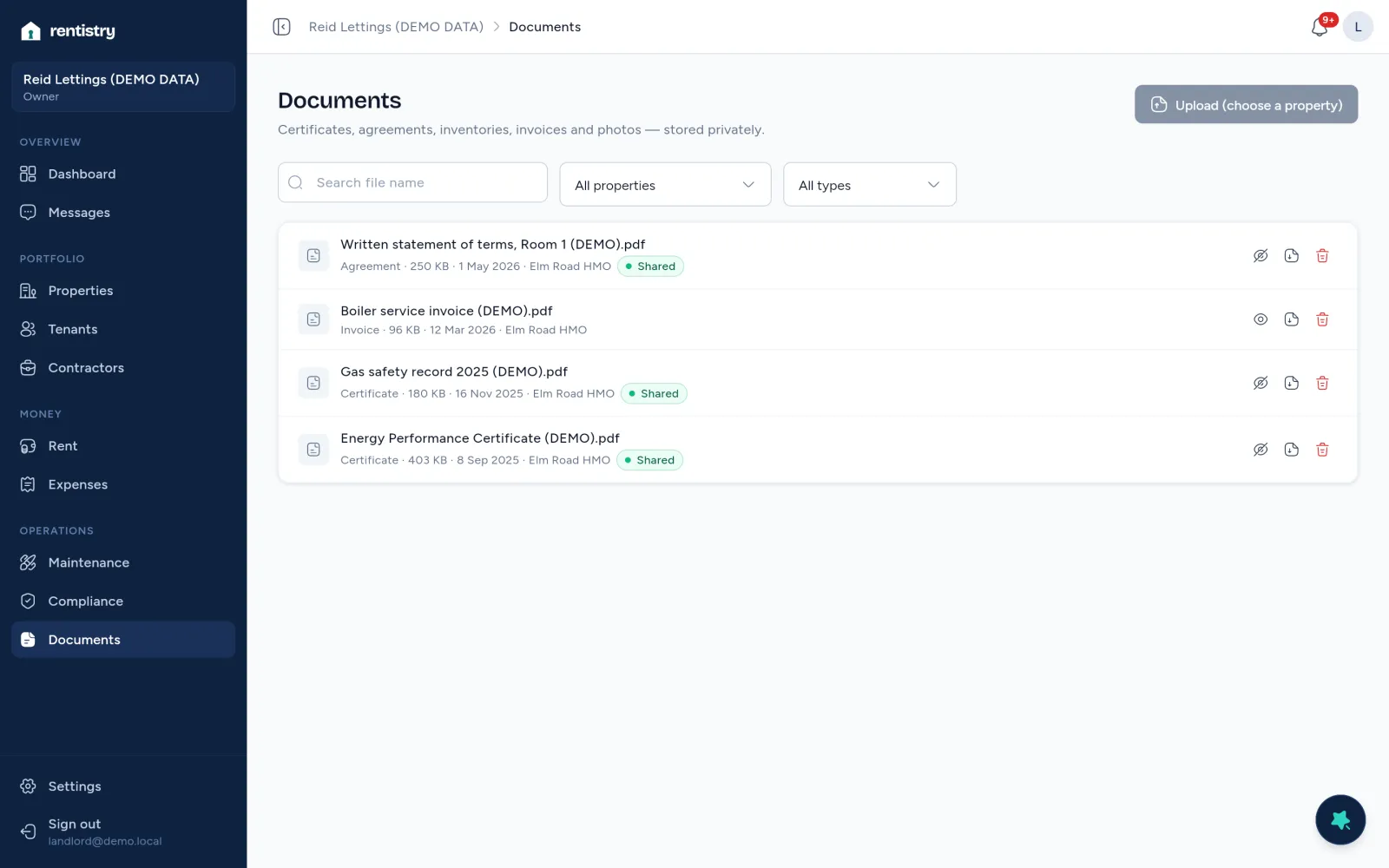
Certificates, agreements, inventories, invoices and photos, stored privately against the property, tenancy or repair.
- The problem
- The certificate you need is in an email attachment from two years ago, or in a drawer.
- What it saves you
- Search by name, filter by property and type, and share a document with your tenant when you choose.
- Upload several files at once, up to 25 MB each
- Opt-in sharing with the tenant, who sees it in their portal
- Files open through links that expire after five minutes
Messages and reminders
A conversation with your tenants for each tenancy, and notifications for what needs you.
- The problem
- Tenant conversations are scattered across texts, calls and email, separate from the records they relate to.
- What it saves you
- Messages sit beside the tenancy, and a daily check reminds you about rent, repairs and dates.
- Messages with photo and file attachments, and read receipts
- In-app notifications for overdue rent, expiring certificates, new repairs and messages
- Choose which notifications you get
- Email reminders when email delivery is set up; the app tells you plainly when it isn’t
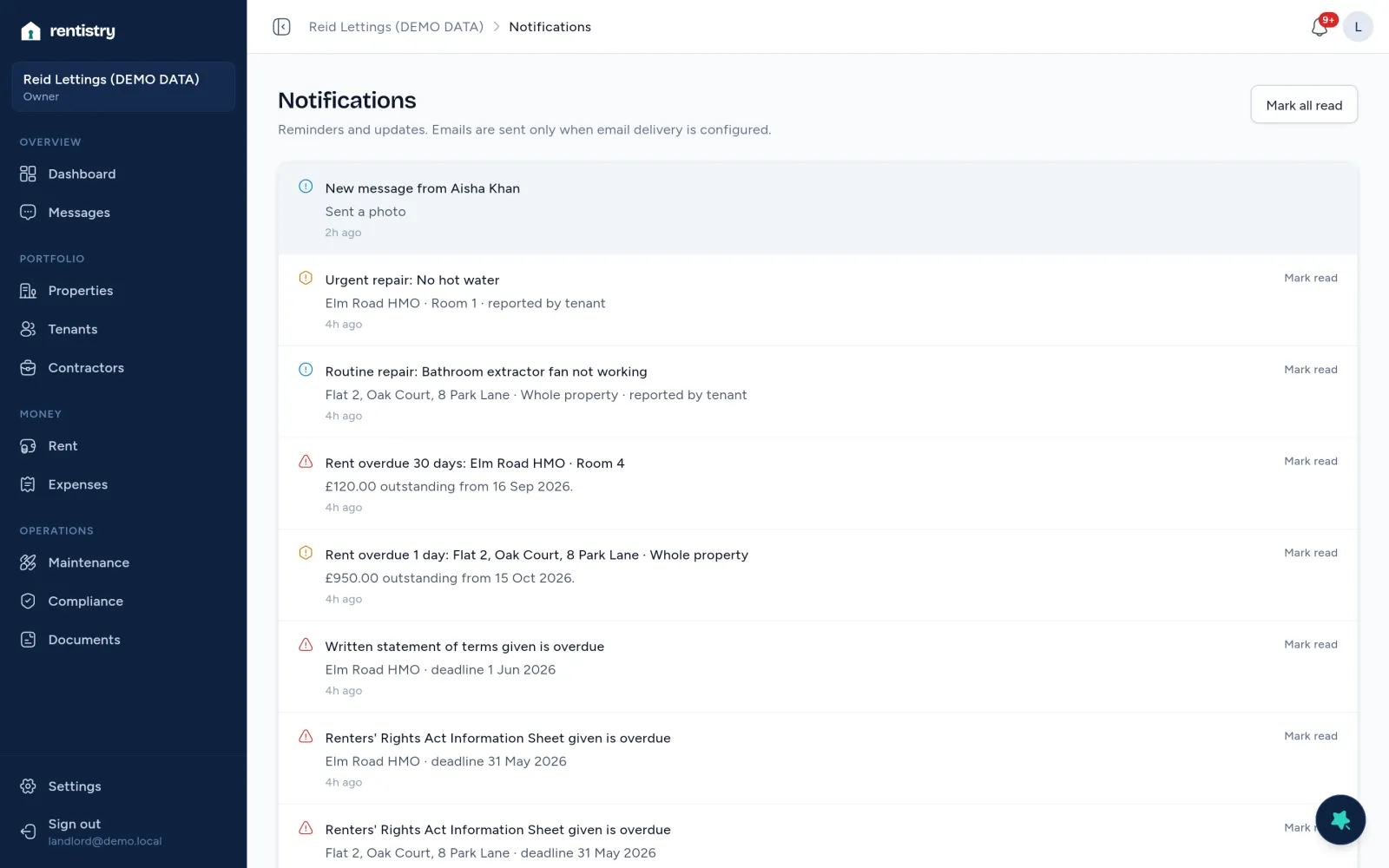
Notifications, demo data.
AI Landlord Assistant Premium
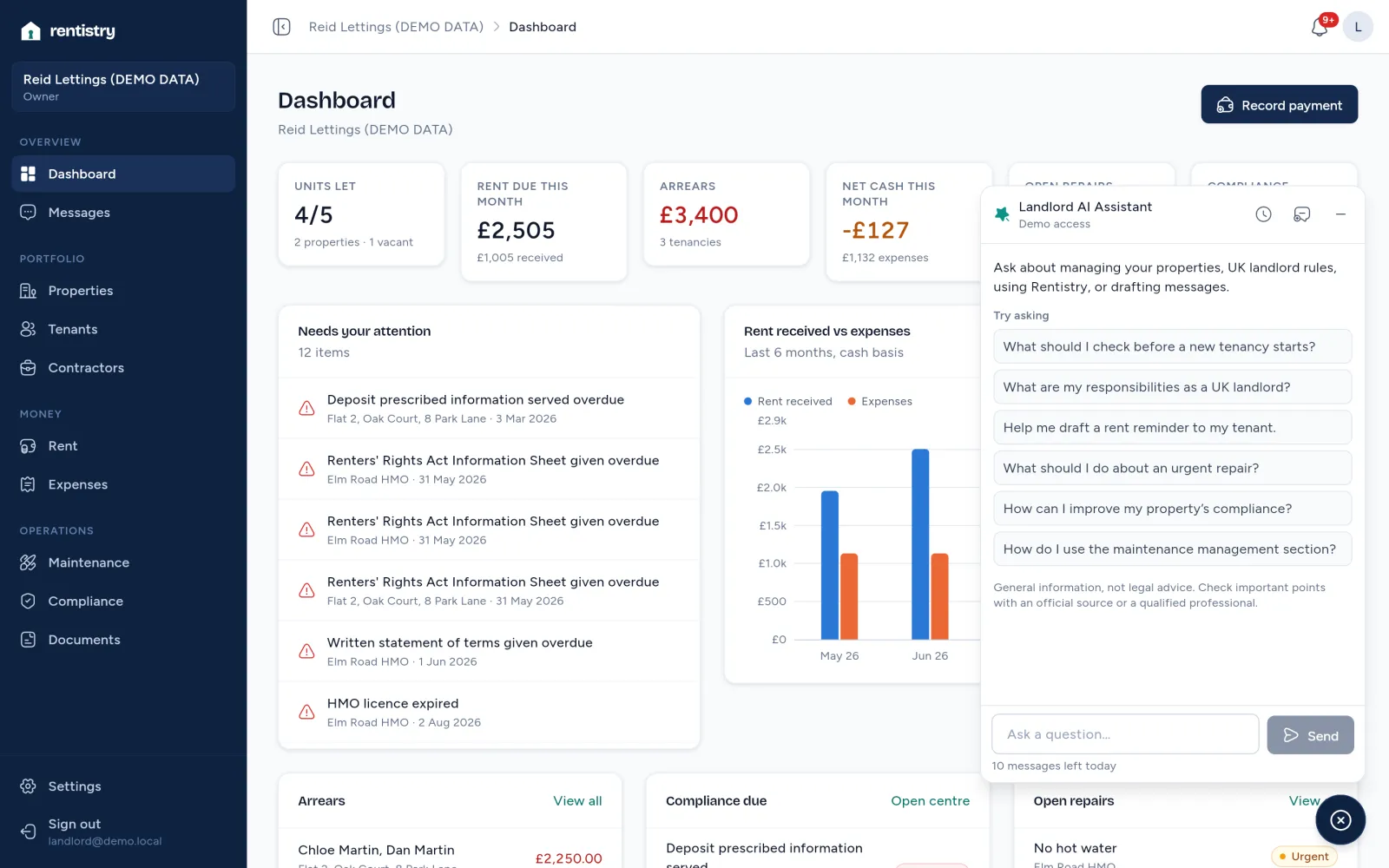
Ask general questions about letting in the UK and about using Rentistry, and get drafts of messages to tenants and contractors.
- The problem
- Writing the same kinds of messages, and looking up the same rules, again and again.
- What it saves you
- A first draft in seconds, with the details of the property or repair you’re looking at if you choose.
- Drafts only: it never sends messages or changes your records
- Uses a short summary of the current page only when you leave that option on
- Your past conversations, which you can delete
- Message allowances per day and per month
General information, not legal advice. Part of the Premium plan; until plans launch, it’s available to demonstration accounts. Ask about Premium.
Not in Rentistry yet
So you know where you’ll still need another service:
- Collecting rent online (you record payments you receive)
- E-signatures, tenant referencing and Right to Rent checks
- Advertising properties and managing applications
- Logins for contractors
- Generating legal notices or tenancy agreements